
Madison Reed App
Madison ReedBeauty
3.8170.00 Reviews
- Version
- 3.22.1
- Installs
- 100.00K
- Age Rating
- Everyone
Screenshots

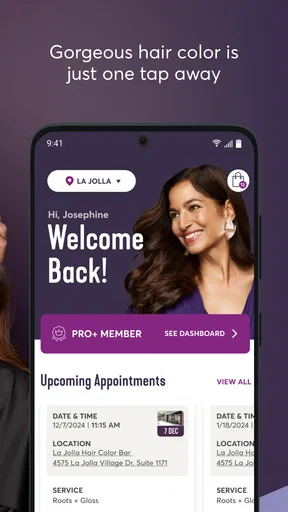
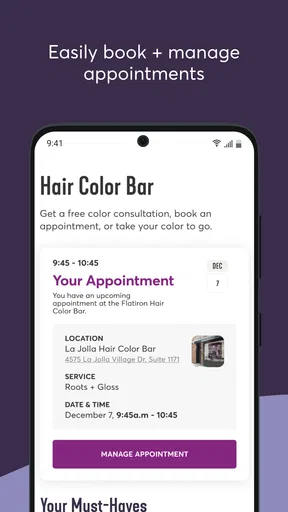

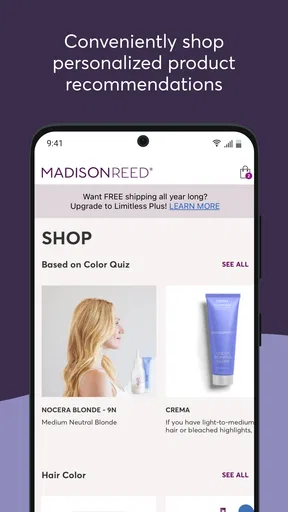
Our Review of Madison Reed App
 Analysis by Appyee
I approached Madison Reed as a practical beauty app rather than a replacement for a colorist. Its central appeal is simple: it puts Madison Reed’s hair-color shopping experience on a phone and makes the first decision less intimidating. That matters because choosing a shade online can otherwise feel like comparing nearly identical boxes and hoping the result suits your current hair.
In my experience, the app is most useful when I want to move from “I should refresh my color” to a more organized decision. It belongs to the Beauty category, is free to use, and is suitable for Everyone. Madison Reed is the developer, and the app has passed the early stage of being a new release: it launched on March 10, 2021, and the current version is 3.22.1.
What the shade-finding experience changes
The verified capability I kept returning to is the app’s guided approach to choosing hair color. Instead of treating the process like a regular product catalog, it presents color selection as a personal matching task. That shift is more important than it sounds. A shade name can be attractive, but it does not tell me whether it will make sense with my existing color, the amount of gray I want to cover, or the kind of change I am actually prepared to maintain.
The app’s value is therefore not just that it displays Madison Reed products. Its better contribution is helping me narrow the decision before I buy. For someone who has stared at a row of warm browns, cool browns, and dark blondes and still felt uncertain, a guided route can reduce the temptation to choose based only on a model photo.
I would describe this as a confidence tool. It cannot remove every uncertainty involved in coloring hair at home, but it can make the selection stage feel less random. That is especially helpful for a first-time buyer, someone returning to a familiar shade after a long break, or anyone who wants to change tone without making a dramatic jump.
The strongest part is the reduction of choice overload. Many beauty shopping apps are essentially polished shelves. Madison Reed’s app is more useful when I treat it as a starting point for reasoning: what result do I want, how close is that result to my current hair, and am I choosing a realistic next step rather than an idealized picture?
Using it before placing an order
I would open the app before making a shopping list, not after deciding on a specific box. That order makes a difference. If I begin with a product name, I am likely to defend that choice even when another shade would be more sensible. Starting with the guided experience encourages me to think about the outcome first.
A useful everyday workflow is to check my current hair in ordinary indoor light, decide whether I want a subtle refresh or a noticeable change, and then use the app to explore the closest options. I would keep a note of the shade family that feels right, then step away and look again later. Hair-color decisions are easy to rush when I am browsing late at night, and the app is better used as a comparison aid than as a reason to buy immediately.
One practical tip is to judge the recommendation against the condition of the hair I actually have, not against a stock image. Previous color, faded ends, highlights, and uneven porosity can all affect the final appearance. The app can help me select a direction, but it cannot inspect every strand or guarantee that a digital presentation will translate perfectly at home.
Another useful habit is to separate “I like this shade” from “this shade fits my maintenance routine.” A color that looks appealing may require more frequent attention than I want to give it. If I am busy, travel often, or prefer a low-effort routine, a conservative change may be more satisfying than a bolder choice that quickly shows regrowth.
A realistic weekend scenario
Imagine I notice on Friday that my roots are becoming visible and I have plans the following weekend. I do not necessarily need a total transformation; I need a shade that looks intentional, works with my current appearance, and does not turn a simple touch-up into a stressful experiment. I would use the app to revisit the color direction, compare nearby choices, and decide whether the goal is coverage, tonal adjustment, or a broader change.
That distinction is one of the app’s most useful practical lessons. “I want darker hair” is not the same request as “I want less warmth,” and neither is identical to “I want to blend visible gray.” If I define the problem poorly, even a well-designed shopping experience can lead me toward the wrong product. The app helps most when I arrive with an honest description of the result I want.
After narrowing the choice, I would still read the product instructions carefully and plan the application rather than treating it as a spontaneous cosmetic purchase. I would make sure I had enough time, suitable clothing, and a realistic expectation of the result. The app makes discovery easier; it does not turn home coloring into a zero-preparation task.
This is also where the app compares favorably with a general retailer. A broad marketplace may offer more brands and more unrelated choices, but that variety can make the decision noisier. Madison Reed’s focused environment is less useful if I want to compare every manufacturer, yet more comfortable if I already want to explore Madison Reed’s approach without sorting through an enormous catalog.
Where the experience saves time
The app is convenient for the early research that people often do in small fragments. I can think through a color choice while commuting, during a lunch break, or before a shopping trip instead of opening multiple browser tabs and losing track of what I was comparing. That does not make the process instant, but it makes it easier to return to the same decision.
It is also a better fit for repeat customers who already know roughly what they want. A previous buyer may not need extensive exploration every time, but having the brand’s color-shopping experience in one place can make a refresh less cumbersome. The benefit is modest and practical: less searching, fewer distractions, and a clearer path back to a familiar category.
The app’s scale suggests that it is not an obscure experiment. It has more than a hundred thousand installs, a 3.8 average from about one thousand three hundred ratings, and around one hundred seventy written reviews. I read those figures as evidence of a useful but not universally smooth experience: enough adoption to matter, while the rating leaves room for individual expectations and device experiences to differ.
Tradeoffs I noticed before relying on it
The first limitation is that a guided recommendation is still a recommendation. It can organize a choice, but it cannot fully account for every factor that a professional colorist would assess in person. If my hair has a complicated history, several layers of old dye, strong damage, or a large contrast between roots and lengths, I would be cautious about treating the app as the final authority.
That is the point where a salon consultation becomes the better alternative. A colorist can examine the hair directly, discuss realistic outcomes, and adjust the plan based on texture and previous treatments. The app is designed for convenience and self-directed shopping, not for resolving a technically difficult correction.
The second tradeoff is brand focus. Because this is Madison Reed’s app, it makes sense for someone already considering Madison Reed. It is not the right tool for a person whose main goal is to compare formulas, shade ranges, or application methods across many competing brands. A general beauty retailer or a salon appointment would offer a broader comparison.
The third limitation is emotional rather than technical: a convenient interface can make a major color change feel safer than it really is. Browsing a shade on a screen is low-risk; applying it to hair is not. I would avoid using the app to make an impulsive leap from very dark hair to a much lighter result, especially if I have no experience handling that kind of change. The app can support a decision, but it should not encourage me to skip preparation.
I also would not judge the app solely by whether it gives me a dramatic transformation. Its better use is narrowing and clarifying. If I expect a virtual makeover, salon-level diagnosis, or a complete education in hair chemistry, I am likely to be disappointed. If I expect a focused way to explore Madison Reed color choices, the experience makes more sense.
Small details that improve the decision
One non-obvious advantage is that the app can help expose indecision. If I keep moving between neighboring shades, that may mean I am not ready to change the color family at all. I may only want a refresh, more even tone, or improved coverage. Recognizing that before ordering can prevent an unnecessary experiment.
A second insight is to use the app twice: once for discovery and again after a cooling-off period. On the first visit, I might be drawn to the most noticeable option. On the second, I can ask whether the choice still fits my wardrobe, work setting, and willingness to maintain it. This two-stage workflow is more reliable than treating the first appealing result as a final answer.
A third is to compare the suggested direction with the roots rather than the ends. Ends may be faded or more porous, so they can create a misleading impression of the color I am starting from. Looking at the root area in neutral light gives me a more useful reference for deciding how ambitious the next step should be.
Finally, I would keep the app’s role narrow during the actual application. Use it to decide what to investigate and purchase, then switch attention to the instructions and the condition of the hair. Trying to multitask between browsing and applying color is an avoidable source of mistakes. The app adds the most value before the process begins.
Who benefits most from this app
I think the best audience is someone who wants to color at home but dislikes choosing blindly. That includes people who are new to Madison Reed, repeat users who want a convenient route back to their usual color, and shoppers who need help turning a vague idea into a manageable option. The free price makes it easy to try without committing money just to explore the brand’s selection.
It can also suit a busy person who wants to research in short sessions. The focused category keeps the experience more purposeful than browsing a general marketplace, and the mobile format is convenient when I want to revisit a decision away from a desktop. For a routine refresh, that simplicity can be more valuable than a larger but less organized catalog.
I would recommend skipping it, or at least using it only for preliminary research, if I had a complex color correction in mind. The same applies if I want a stylist’s judgment, need a cross-brand comparison, or am looking for a highly technical explanation of how a color will behave on treated hair. In those cases, the usual alternatives offer better context.
The Everyone age rating makes the app broadly accessible, but that should not be confused with every coloring decision being suitable for every person. The interface may be approachable; the real-world result still depends on the user’s hair, preparation, and expectations. I would treat the age label as a statement about the app’s audience, not as a substitute for careful product use.
My recommendation after using it
Madison Reed’s app succeeds when it stays focused on helping me choose a hair-color direction with less guesswork. It is not a salon in my pocket, and it is not a universal beauty marketplace. Its strength is narrower and more useful: it gives Madison Reed shoppers a more guided way to think through a color purchase.
The current version, 3.22.1, runs on operating systems from version 10 onward, so compatibility is worth checking before installing. Since the app is free, trying it is a low-cost way to see whether its guided approach suits how I make beauty decisions. I would still approach any significant change slowly, especially when my current hair has previous color or uneven condition.
My final view is positive, with clear boundaries. I would recommend it to a friend who already wants to explore Madison Reed and feels overwhelmed by shade choices. I would not recommend relying on it alone for a complicated transformation or using it as a substitute for professional advice. Used as a planning and comparison companion, it makes the most stressful part of at-home coloring—choosing the direction—feel more manageable.
Verdict
Strengths of Madison Reed App
- Easy to browse hair color products and shades from your phone.
- Virtual try-on helps you preview different colors before buying.
- Personalized shade recommendations simplify product selection.
- Appointments and salon services can be managed conveniently in-app.
- Useful access to color-care products, kits, and application guidance.
Limitations of Madison Reed App
- Virtual color previews may not accurately reflect your final hair color.
- Some features may depend on location or Madison Reed salon availability.
- The app focuses mainly on Madison Reed products and services.
- Coloring at home still requires careful preparation and application.
- Product prices and salon services may be higher than some alternatives.
Similar Picks in This Category
View All
Beauty Makeup Editor & Camera
Photo & Video Editors - Instant Solution4.7

Perfect365: Face Makeup Editor
Perfect365, Inc.3.5

Mirror Plus - HD Mirror app
Digitalchemy, LLC4.8

Cute Lock Screen & Wallpapers
Prometheus Interactive LLC4.6

HD Camera for Android
One Music Player4.5

Phone Mirror app - True Mirror
Cards4.6
Frequently Asked Questions
What is the Madison Reed app used for?
The Madison Reed app is designed to help you explore and purchase at-home hair color, hair-care products, and related beauty items. After browsing shades and product details, you can review recommendations, add items to your cart, and manage your order from a mobile device. It is especially useful for customers who want Madison Reed products without visiting a salon or physical store.
Can the Madison Reed app help me choose the right hair color?
The app can make shade selection easier by presenting product descriptions, color information, and guidance for comparing available options. However, digital recommendations cannot perfectly predict how a color will appear on every person, since existing hair color, texture, condition, and previous treatments all matter. Read the instructions carefully and use any available shade-matching tools before placing an order.
Can I buy Madison Reed products directly through the app?
In supported regions, the app allows you to browse Madison Reed products and complete purchases through its shopping features. You can typically view item information, select products, enter delivery details, and choose an available payment method at checkout. Product availability, shipping options, and app functionality may vary by location, so confirm the final order summary before submitting your purchase.
Does the Madison Reed app provide professional hair-color advice?
The app may offer educational content, product guidance, shade information, and access to Madison Reed’s customer-support resources. These tools can be helpful when you are planning an at-home coloring session, but they should not be treated as a replacement for a licensed stylist or medical professional. If your hair is damaged, chemically treated, or you have concerns about allergies, seek personalized advice first.
Is the Madison Reed app free to download, and are there any additional costs?
The app may be available to download without an upfront charge, but downloading it does not make the products or services free. You may still pay for hair color, treatments, shipping, taxes, and any other charges shown during checkout. Before confirming an order, review the complete price breakdown, delivery terms, promotional conditions, and return policy so there are no unexpected costs.
